2024-10-07
How do we understand fine laser cutting machines
(Click 387 )Fine laser cutting machines are based on laser beams that are focused and irradiated on the workpiece. Because of its high density and high energy characteristics, it is more precise than traditional cutting machines. At the same time, diversified product processing can be used, such as laser cutting, engraving, marking, etc.
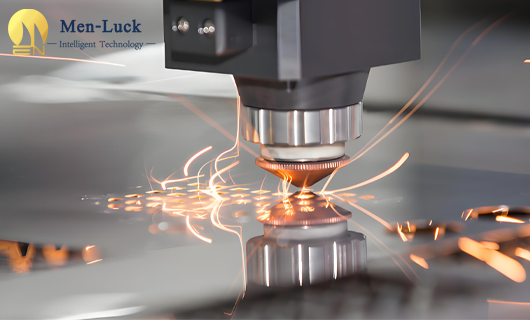
Fine laser cutting machines use fiber lasers, which use optical fibers doped with rare earth elements as the effective gain medium. Due to the transmission characteristics of laser, the entire processing process of the fine laser cutting machine can be fully numerically controlled. By simply changing the software program and parameters, parts of different shapes can be cut, both 2D and 3D.
Since the fine laser cutting machine is a non-contact process during production and processing, the laser cutting head will not be in direct contact with the surface of the material to be processed, so there is no possibility of scratches on the material surface. For medical devices, the cut surface finish of the processed materials must be fine, which can meet the requirements of one-time molding and avoid secondary or multiple reprocessing after the material is molded, which will cause time and material losses. In this way, production efficiency will be greatly improved. From the workpiece itself, medical devices are very different from other mechanical parts. It requires very high precision without any deviation, and fine laser cutting machines can meet these processing requirements very well.
Men-luck fine laser cutting machines can process a variety of materials, including metallic materials such as aluminum, copper, titanium and stainless steel; non-metallic materials such as plastics, rubber and composite materials; and hard or brittle materials such as ceramics and glass. It is widely used in medical equipment, 3C electronics, aerospace and other fields. Companies are welcome to contact us for details.
 WhatsApp:
 Wechat
Selecting Laser Cutting Machine Configurations Based on Application 2026-11-12
Different processing applications impose distinct requirements on fiber laser cutting machines. A reliable approach to equipment selection is to first analyze the workpieces, then evaluate the technical specifications. For thin-sheet batch components—such as enclosures o…
Key points for selecting fiber laser cutting machine for cutting thick carbon steel plates 2026-10-21
The cutting of thick carbon steel plates is a key concern for many equipment supervisors in metal processing plants. Traditional plasma cutting has a rough cross-section and requires a large amount of subsequent processing; The performance of fiber laser cutting machines in the…
Fiber Laser Cutting Machine: Addressing Stainless Steel Slag Adhesion 2026-09-29
In stainless steel cutting, slag hanging and burrs are common issues in sheet metal workshops, which not only increase grinding time but also affect workpiece accuracy and delivery efficiency. As a laser cutting machine manufacturer, we share several practical suggestions from …
Laser precision cutting machine: the core equipment for semiconductor and communication device manufacturing 2026-08-17
In the field of semiconductor and communication device manufacturing, the limits of accuracy are constantly being rewritten - chip processes are approaching physical limits, 5G base station filter apertures continue to shrink, and tolerances for some key features have entered t…