2025-08-05
Picosecond Laser Cutting Machine: A Precision Machining Solution for the Medical Industry
(Click 298 )In the medical field, picosecond laser cutting machines, with their unique advantages, are revolutionizing medical product processing and providing a powerful boost to advancements in medical technology. Picosecond laser cutting machines output energy in ultrashort pulses, with pulse widths in the picosecond range (trillionths of a second). This characteristic enables them to precisely focus energy on a very small area in a very short time during material processing. When applied to medical materials, they instantly vaporize the target area, significantly reducing the impact of heat conduction on surrounding tissue, achieving a “cold processing” effect.
Picosecond laser cutting machines have demonstrated outstanding performance in medical device manufacturing. For example, in cardiovascular stent manufacturing, traditional processing methods struggle to create fine and complex mesh structures on extremely thin metal tubes (such as cobalt-chromium alloys and nickel-titanium alloys). Picosecond lasers can precisely cut gaps as small as tens of microns, ensuring a uniform stent mesh and smooth, burr-free edges. This ensures long-term, stable operation after implantation, reduces the risk of endothelial damage, and improves surgical success rates.
In the fabrication of microneedle arrays, picosecond lasers can precisely engrave micron-scale needle-like structures on the surfaces of biocompatible materials (such as silicon and polymers), enabling applications in transdermal drug delivery and skin testing. This precision ensures consistent microneedle length and spacing, improving drug delivery efficiency and detection accuracy.
Picosecond laser cutting machines also play a key role in biomedical research. Conventional cutting methods can easily cause tissue deformation and cell damage in biological tissue sections, compromising subsequent analysis. Picosecond lasers can create ultrathin sections of biological samples (such as brain tissue and tumor tissue) down to micron thickness without damaging cellular structures. This provides high-quality samples for pathological analysis and cell imaging, enabling researchers to more clearly observe cell morphology and tissue structure, and to delve deeper into the mechanisms of disease development.
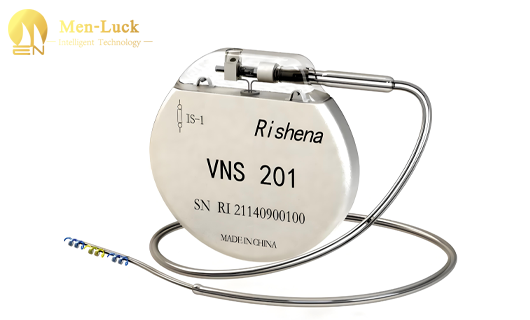
Furthermore, in the fabrication of implantable medical sensors, picosecond lasers can precisely cut circuit patterns and sensor element structures on tiny chips or thin films, ensuring high sensitivity and stability, and providing reliable hardware support for real-time monitoring of physiological indicators (such as blood sugar and blood pressure). With its high-precision and low-heat-impact processing characteristics, picosecond laser cutting machines are being deeply integrated into every aspect of the medical industry, from device manufacturing to scientific research and exploration, pushing medical technology to new heights of precision and efficiency, and making important contributions to the development of human health.
 WhatsApp:
 Wechat
Laser precision cutting machine: the core equipment for semiconductor and communication device manufacturing 2026-08-17
In the field of semiconductor and communication device manufacturing, the limits of accuracy are constantly being rewritten - chip processes are approaching physical limits, 5G base station filter apertures continue to shrink, and tolerances for some key features have entered t…
Metal Laser Cutting Machines for Precision Airbag Generator Components 2026-07-17
In automotive passive safety systems, the airbag generator is a propellant-driven precision device. It contains multiple thin-walled metal components, such as the igniter housing, filter support, and gas diffuser. These components need to withstand extremely high temperatures a…
Laser Cutting Machines: An Efficiency Revolution for Construction Sites and Factory Maintenance 2026-06-26
In construction installation, equipment rental, and factory maintenance, do you often encounter this dilemma: urgently needing a steel beam of a specific size, an irregularly shaped reinforcing plate, or a non-standard flange gasket? Outsourcing processing has long cycles, and …
Femtosecond Laser Precision Cutting: Overcoming the Challenges of Processing Nickel-Titanium Heart Stents 2026-05-19
In the field of interventional cardiology, heart stents are hailed as the "guardians of life's pathways." A nickel-titanium alloy tube—measuring a mere 1.5 millimeters in diameter with a wall thickness of approximately 100 microns—must be processed into a mesh-like structure fe…