2024-07-11
Laser Slotting and Drilling Technology for Microfluidic Biochip
(Click 418 )Biochip is a special microfluidic chip. It places biological samples on glass, silicon wafers, nylon membranes and other substrates, then uses equipment to collect signals and computers to analyze the data results. During the production and use of microfluidic chips, it’s often necessary to cut them. The biochip laser cutting machine is a laser equipment used for grooving and drilling biochips.
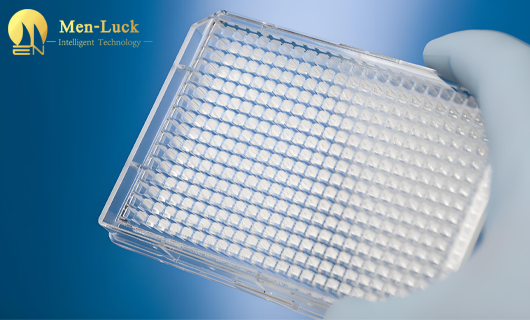
Biochip laser cutting machine is a precision cutting equipment that can be used for high-precision cutting, drilling, grooving, etc. of biochips to achieve high precision, high efficiency, and smooth edges. Laser cutting of biochips uses a non-contact cutting method, which requires no secondary processing and is more accurate than traditional cutting methods.
Traditional mechanical processing mainly uses cards, clamping, compression and other methods to fix the material on the processing platform. Mechanical stress is generated, which will wear and damage the surface of the biochip. Moreover, the material utilization ratio is low and the machining efficiency is also low. It makes it unsuitable for mass production. The biochip laser cutting machine can effectively solve these technical difficulties and is widely used in the field of biochip cutting.
Compared with traditional cutting methods, laser cutting machines have high processing accuracy, fast speed, narrow slits, small heat-affected zones, and smooth cutting surfaces; they have good processing flexibility and can also cut pipes and other special-shaped materials.
As a professional laser equipment manufacturing company, Men-luck can develop targeted system solutions based on the product needs of different industries, recommend suitable models, customize personalized functions for enterprises, and provide remote technical support. Interested customers are welcome to contact us.
 WhatsApp:
 Wechat
Selecting Laser Cutting Machine Configurations Based on Application 2026-11-12
Different processing applications impose distinct requirements on fiber laser cutting machines. A reliable approach to equipment selection is to first analyze the workpieces, then evaluate the technical specifications. For thin-sheet batch components—such as enclosures o…
Key points for selecting fiber laser cutting machine for cutting thick carbon steel plates 2026-10-21
The cutting of thick carbon steel plates is a key concern for many equipment supervisors in metal processing plants. Traditional plasma cutting has a rough cross-section and requires a large amount of subsequent processing; The performance of fiber laser cutting machines in the…
Fiber Laser Cutting Machine: Addressing Stainless Steel Slag Adhesion 2026-09-29
In stainless steel cutting, slag hanging and burrs are common issues in sheet metal workshops, which not only increase grinding time but also affect workpiece accuracy and delivery efficiency. As a laser cutting machine manufacturer, we share several practical suggestions from …
Laser precision cutting machine: the core equipment for semiconductor and communication device manufacturing 2026-08-17
In the field of semiconductor and communication device manufacturing, the limits of accuracy are constantly being rewritten - chip processes are approaching physical limits, 5G base station filter apertures continue to shrink, and tolerances for some key features have entered t…