2026-02-27
Needle laser cutting machine: Defining a new standard for precision machining of medical devices
(Click 247 )In today’s rapidly developing field of minimally invasive medical technology, the precision of medical devices directly impacts surgical success and patient recovery quality. As a core consumable, the processing quality of needles is paramount. Laser needle cutting machines, with their advantages of high precision, non-contact operation, and burr-free technology, have become indispensable core equipment in the production of minimally invasive devices such as insulin needles and puncture needles.
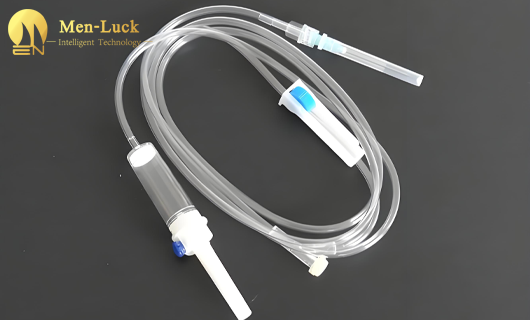
Compared to traditional mechanical cutting, laser cutting represents a qualitative leap. It boasts micron-level precision, with a positioning accuracy of ±2μm, enabling the processing of micro-holes in insulin needles with an outer diameter of 0.18mm and an inner diameter of 0.08mm—a feat unattainable with traditional methods. Simultaneously, non-contact processing avoids mechanical stress damage, protects the structural strength of thin-walled needles, minimizes heat-affected zones after process optimization, and produces smooth, burr-free cuts, significantly improving the reliability of the needles in subsequent use.
Its applications span multiple medical fields: in needle manufacturing, it can process “three-sided” needle tips to reduce patient pain and precisely drill holes and grooves; in minimally invasive surgical instruments such as radiofrequency ablation needles and liposuction needles, it can process complex irregular structures on 1mm diameter nickel-titanium alloy tubes; and in cardiac stent production, it is the only highly efficient method for processing 50μm thick honeycomb-shaped hollow structures.
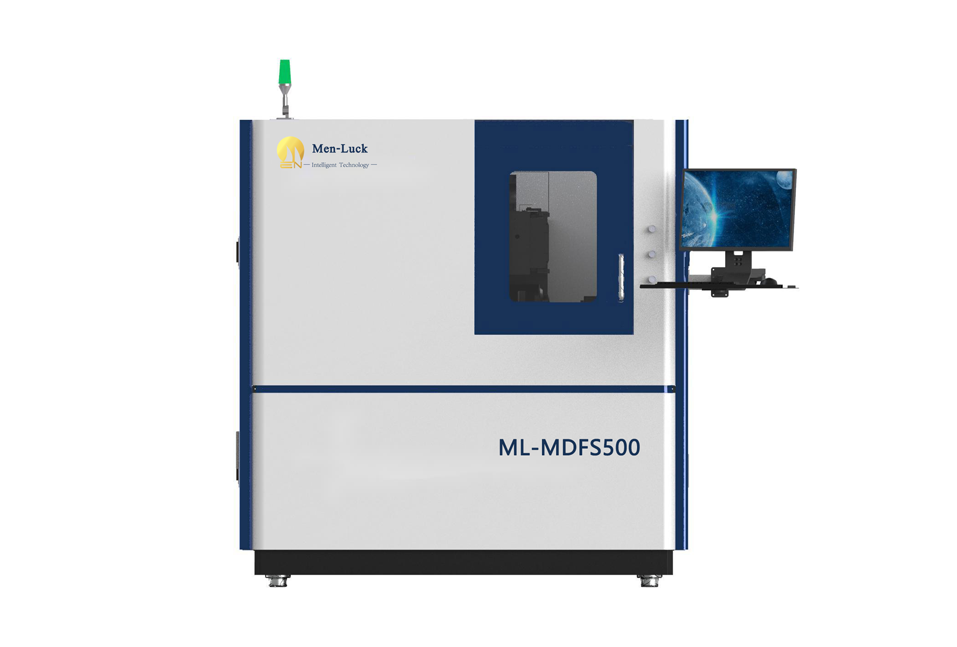
As the medical market moves towards minimally invasive and precision procedures, the role of needle laser cutting machines becomes increasingly crucial. It improves material utilization, reduces subsequent processes, and enables digital integration of production. In the future, combined with cutting-edge technologies such as femtosecond lasers, it will continue to push processing limits, safeguarding the production of high-quality medical devices.
 WhatsApp:
 Wechat
Laser precision cutting machine: the core equipment for semiconductor and communication device manufacturing 2026-08-17
In the field of semiconductor and communication device manufacturing, the limits of accuracy are constantly being rewritten - chip processes are approaching physical limits, 5G base station filter apertures continue to shrink, and tolerances for some key features have entered t…
Metal Laser Cutting Machines for Precision Airbag Generator Components 2026-07-17
In automotive passive safety systems, the airbag generator is a propellant-driven precision device. It contains multiple thin-walled metal components, such as the igniter housing, filter support, and gas diffuser. These components need to withstand extremely high temperatures a…
Laser Cutting Machines: An Efficiency Revolution for Construction Sites and Factory Maintenance 2026-06-26
In construction installation, equipment rental, and factory maintenance, do you often encounter this dilemma: urgently needing a steel beam of a specific size, an irregularly shaped reinforcing plate, or a non-standard flange gasket? Outsourcing processing has long cycles, and …
Femtosecond Laser Precision Cutting: Overcoming the Challenges of Processing Nickel-Titanium Heart Stents 2026-05-19
In the field of interventional cardiology, heart stents are hailed as the "guardians of life's pathways." A nickel-titanium alloy tube—measuring a mere 1.5 millimeters in diameter with a wall thickness of approximately 100 microns—must be processed into a mesh-like structure fe…