2026-06-26
Laser Cutting Machines: An Efficiency Revolution for Construction Sites and Factory Maintenance
(Click 358 )In construction installation, equipment rental, and factory maintenance, do you often encounter this dilemma: urgently needing a steel beam of a specific size, an irregularly shaped reinforcing plate, or a non-standard flange gasket? Outsourcing processing has long cycles, and on-site cutting is rough and laborious. The emergence of laser cutting machines is completely changing this situation.
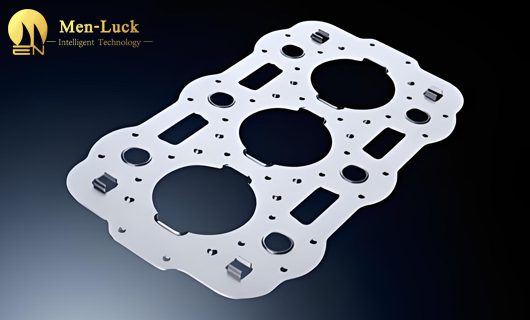
Laser cutting machines utilize high-energy laser beams to instantly melt and vaporize metal materials, combined with a CNC system to achieve precise cutting of any shape. Compared to traditional plasma or flame cutting, its core advantages are irreplaceable.
Traditional handheld cutting often has an error of 2-5mm, while laser cutting can achieve a positioning accuracy of ±0.05mm. This means that when fabricating equipment bases and pipe supports on-site, the cut holes and edges can be directly assembled without secondary grinding, significantly reducing downtime.
For maintenance teams, the biggest headache is the complexity of spare parts. A single laser cutting machine can store thousands of drawings. For irregularly shaped gaskets or non-standard connecting rods in older equipment, only measurement and drawing are needed; the finished product can be cut within 5 minutes. Waiting for casting or outsourcing is no longer necessary, and the response speed for equipment repairs is multiplied.
Stainless steel, carbon steel, and aluminum plates are frequently used in construction and maintenance. Laser cutting can automatically optimize nesting (known in the industry as “nesting”), increasing the utilization rate of sheet metal from 70% with traditional manual cutting to over 90%. For rental companies, one machine can simultaneously serve the cutting needs of multiple construction sites, reducing material waste and directly increasing profits.
For components with painted or galvanized surfaces, flame cutting burns the coating and produces slag. Laser cutting has a heat-affected zone of only about 0.1mm, with a vertical and smooth cut that requires no additional grinding, directly meeting welding or installation requirements.
Whether it’s processing steel stair treads on construction sites or quickly fabricating equipment covers in factory maintenance, laser cutting machines have become a “mobile spare parts workshop” for modern construction and maintenance management. Investing in a laser cutting machine, or signing a lease agreement with a qualified rental service provider, can give your team a competitive edge in precision, efficiency, and cost control.
 WhatsApp:
 Wechat
Selecting Laser Cutting Machine Configurations Based on Application 2026-11-12
Different processing applications impose distinct requirements on fiber laser cutting machines. A reliable approach to equipment selection is to first analyze the workpieces, then evaluate the technical specifications. For thin-sheet batch components—such as enclosures o…
Key points for selecting fiber laser cutting machine for cutting thick carbon steel plates 2026-10-21
The cutting of thick carbon steel plates is a key concern for many equipment supervisors in metal processing plants. Traditional plasma cutting has a rough cross-section and requires a large amount of subsequent processing; The performance of fiber laser cutting machines in the…
Fiber Laser Cutting Machine: Addressing Stainless Steel Slag Adhesion 2026-09-29
In stainless steel cutting, slag hanging and burrs are common issues in sheet metal workshops, which not only increase grinding time but also affect workpiece accuracy and delivery efficiency. As a laser cutting machine manufacturer, we share several practical suggestions from …
Laser precision cutting machine: the core equipment for semiconductor and communication device manufacturing 2026-08-17
In the field of semiconductor and communication device manufacturing, the limits of accuracy are constantly being rewritten - chip processes are approaching physical limits, 5G base station filter apertures continue to shrink, and tolerances for some key features have entered t…