2025-06-07
Laser cutting machine: the precision blade that reshapes modern manufacturing
(Click 318 )Laser cutting machine uses photons as a knife, and with its core advantages of non-contact, zero deformation, and multi-material compatibility, it is deeply integrated into the modern manufacturing system. From micron-level medical stents to giant engineering structures, it has become the core driving force of industrial upgrading with breakthrough accuracy and efficiency.
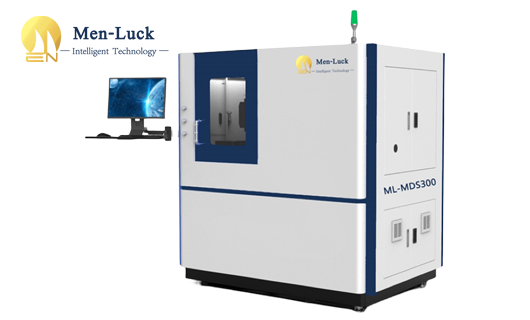
Traditional processing is limited by physical contact and tool wear, while laser cutting achieves micron-level control through focused beams. The “cold processing” characteristics of femtosecond lasers compress the heat-affected zone to within 5μm, perfectly preserving material properties; five-axis dynamic focusing technology gives the three-dimensional surface the freedom to cut arbitrarily, and etches 0.05mm micropores on 0.1mm thick stainless steel with an accuracy comparable to the diameter of a hair. The AI path optimization system compresses the programming time of complex workpieces from several hours to minutes, and with the intelligent nesting software, the material utilization rate is increased by more than 30%.
In the medical field, the grid accuracy of laser-cut heart stents reaches 8μm, and the complication rate is reduced by 40%; the cutting efficiency of new energy vehicle battery pole pieces is increased by 200%, which helps to break through the endurance; the weight of aerospace titanium alloy components is reduced by 30%, and the cutting cycle of satellite fuel tanks is shortened by 60%. The micron-level processing of folding screen hinges in consumer electronics supports the bending life of the equipment for 200,000 times; 30kW high-power equipment in the construction field can cut 100mm carbon steel, which is 4 times more efficient than traditional processes.
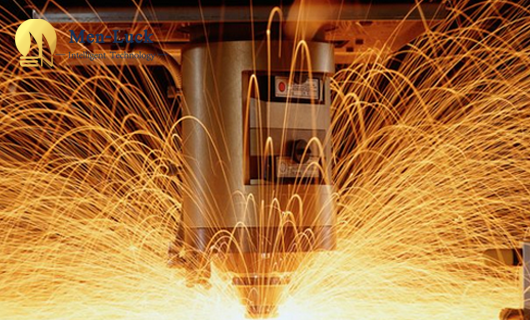
Ultrafast lasers are evolving towards attosecond (10⁻¹⁸ seconds) precision, opening a new era of atomic-level manufacturing. Multiphoton polymerization technology will realize the in-situ construction of nano-functional structures, paving the way for quantum chips. The integration of digital twins and industrial Internet is building a global collaborative “cloud factory” network, with a response efficiency increase of 200%. The breakthrough of domestic technology is particularly eye-catching-the cost of 10,000-watt fiber lasers is only 60% of imported equipment, promoting the popularization of high-end manufacturing.
 WhatsApp:
 Wechat
Selecting Laser Cutting Machine Configurations Based on Application 2026-11-12
Different processing applications impose distinct requirements on fiber laser cutting machines. A reliable approach to equipment selection is to first analyze the workpieces, then evaluate the technical specifications. For thin-sheet batch components—such as enclosures o…
Key points for selecting fiber laser cutting machine for cutting thick carbon steel plates 2026-10-21
The cutting of thick carbon steel plates is a key concern for many equipment supervisors in metal processing plants. Traditional plasma cutting has a rough cross-section and requires a large amount of subsequent processing; The performance of fiber laser cutting machines in the…
Fiber Laser Cutting Machine: Addressing Stainless Steel Slag Adhesion 2026-09-29
In stainless steel cutting, slag hanging and burrs are common issues in sheet metal workshops, which not only increase grinding time but also affect workpiece accuracy and delivery efficiency. As a laser cutting machine manufacturer, we share several practical suggestions from …
Laser precision cutting machine: the core equipment for semiconductor and communication device manufacturing 2026-08-17
In the field of semiconductor and communication device manufacturing, the limits of accuracy are constantly being rewritten - chip processes are approaching physical limits, 5G base station filter apertures continue to shrink, and tolerances for some key features have entered t…