2025-01-03
Laser cutting machine: the hero behind the development of laser medical stents
(Click 270 )In the continuous innovation of modern medical technology, laser cutting technology has gradually become an important tool in the field of medical device manufacturing due to its high precision and flexibility. Especially in the development of laser medical stents, laser cutting machines are playing an irreplaceable role, providing patients with safer and more effective treatment options.
Laser cutting machines use high-energy laser beams to precisely cut materials, with an accuracy of up to micrometer level. This feature enables laser cutting machines to achieve precision that traditional mechanical processing cannot achieve when processing complex materials such as medical metals and polymers. As an interventional medical device, medical stents have a complex structure and require extremely high dimensional accuracy and surface quality. Laser cutting technology can perfectly meet these requirements, ensuring that every detail of the stent meets medical standards, thereby enhancing the biocompatibility and mechanical performance of the stent.
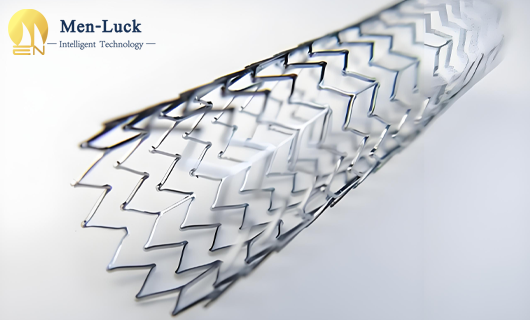
In recent years, with the aging of the population and the rise of the incidence rate of cardiovascular diseases, the market demand for high-performance medical stents is growing. The efficient production capacity and consistent quality standards of laser cutting machines make it possible to mass produce high-performance medical stents. This not only meets market demand, but also reduces the production cost of medical stents, allowing more patients to benefit from this advanced technology.
In addition to its application in the manufacturing process, laser cutting machines have also played an important role in the innovative design of medical stents. Its flexible cutting ability can easily achieve various complex structural designs, providing doctors and engineers with more choices and promoting the development of personalized medical stents. Personalized medical stents can better adapt to the specific needs of different patients, improve treatment effectiveness, and reduce complications.
More and more medical device manufacturers worldwide are adopting laser cutting technology to produce medical stents. This trend not only drives the further development of laser cutting technology, but also promotes the overall progress of the medical device industry. With the continuous advancement of technology and further cost reduction, the application prospects of laser cutting machines in the medical field will be even broader.
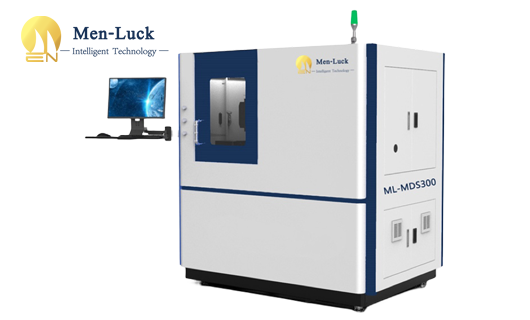
As an important tool in medical device manufacturing, laser cutting machines are helping the development of laser medical stents with their high precision, high efficiency, and flexibility, bringing new hope to patients worldwide. In the future, with the continuous innovation of technology, laser cutting machines will continue to play an important role in the medical field, promoting the continuous progress of medical devices and making greater contributions to human health.
 WhatsApp:
 Wechat
Laser precision cutting machine: the core equipment for semiconductor and communication device manufacturing 2026-08-17
In the field of semiconductor and communication device manufacturing, the limits of accuracy are constantly being rewritten - chip processes are approaching physical limits, 5G base station filter apertures continue to shrink, and tolerances for some key features have entered t…
Metal Laser Cutting Machines for Precision Airbag Generator Components 2026-07-17
In automotive passive safety systems, the airbag generator is a propellant-driven precision device. It contains multiple thin-walled metal components, such as the igniter housing, filter support, and gas diffuser. These components need to withstand extremely high temperatures a…
Laser Cutting Machines: An Efficiency Revolution for Construction Sites and Factory Maintenance 2026-06-26
In construction installation, equipment rental, and factory maintenance, do you often encounter this dilemma: urgently needing a steel beam of a specific size, an irregularly shaped reinforcing plate, or a non-standard flange gasket? Outsourcing processing has long cycles, and …
Femtosecond Laser Precision Cutting: Overcoming the Challenges of Processing Nickel-Titanium Heart Stents 2026-05-19
In the field of interventional cardiology, heart stents are hailed as the "guardians of life's pathways." A nickel-titanium alloy tube—measuring a mere 1.5 millimeters in diameter with a wall thickness of approximately 100 microns—must be processed into a mesh-like structure fe…