2025-05-26
How to choose a suitable laser cutting machine?
(Click 455 )1. Clarify processing requirements
① Material type and thickness
The laser cutting machine needs to select the laser type according to the processing material:
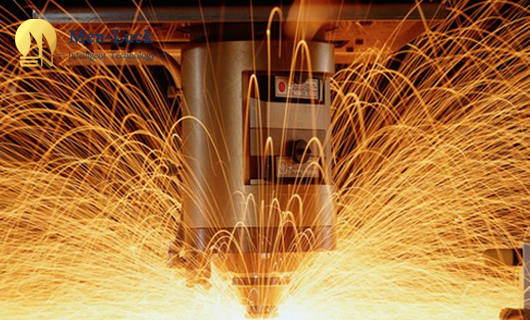
Metal materials (such as stainless steel, aluminum alloy): Fiber laser cutting machines are preferred, and their power range is usually 500W-6000W, and the cutting thickness ranges from 0.1mm to 30mm.
Non-metallic materials (such as acrylic, wood, leather): CO2 lasers are more suitable because their wavelength (10.6μm) has a higher absorption rate for non-metals.
Special materials (such as highly reflective metal copper and aluminum): Green light or ultraviolet lasers with anti-high reflection technology are required.
② Production scale and efficiency
Small studios: Desktop equipment (such as 300×400mm workbench) is cost-effective and suitable for small batch customization.
Large enterprises: Industrial-grade equipment (such as 14m×3.5m large table) supports continuous operation, as well as automation functions (such as automatic loading and unloading, AI path planning).
2. Core technology and configuration selection
① Laser power and cutting capacity
Low power (500W-1000W): suitable for cutting thin plates below 6mm, with low cost and low energy consumption.
High power (above 3000W): can process plates thicker than 20mm, but auxiliary gases (such as oxygen and nitrogen) must be matched to optimize cutting quality.
② Core component quality
Laser generator: IPG, TRUMPF and other lasers have high stability and long life; Raycus and Max have outstanding cost performance.
Motion system: Linear motors and precision guides ensure ±0.05mm positioning accuracy, suitable for high-precision medical or electronic component processing.
Cooling and dust removal system: High-efficiency water coolers and dust removal equipment can extend the life of laser tubes and reduce smoke pollution.
3. Accuracy and stability evaluation
① Cutting accuracy and surface quality
High-precision equipment can achieve cutting seams below 0.1mm, cutting surface roughness Ra<0.8μm, and no burrs.
Prototype to be tested: Verify whether the inner and outer diameter errors are within ±0.03mm by cutting concentric circles or complex graphics.
② Heat-affected zone (HAZ) control
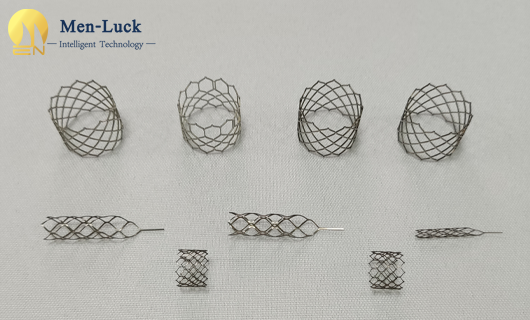
Femtosecond/picosecond ultrafast lasers can compress the heat-affected zone to less than 5μm to avoid material deformation, especially suitable for medical fields such as heart stents and precision sensors.
4. Cost and investment return analysis
① Initial investment
Entry-level equipment: 100,000-500,000 yuan.
Industrial equipment: 500,000-15 million yuan.
② Long-term cost
Consumables: laser lens, auxiliary gas (nitrogen purity must be ≥99.99%).
Energy consumption optimization: Intelligent power management system can reduce electricity costs by 30%, saving tens of thousands of yuan per year.
Laser technology is rapidly iterating. Choosing a suitable device is not only an upgrade of production tools, but also a key step for enterprises to move towards intelligent manufacturing.
 WhatsApp:
 Wechat
Laser precision cutting machine: the core equipment for semiconductor and communication device manufacturing 2026-08-17
In the field of semiconductor and communication device manufacturing, the limits of accuracy are constantly being rewritten - chip processes are approaching physical limits, 5G base station filter apertures continue to shrink, and tolerances for some key features have entered t…
Metal Laser Cutting Machines for Precision Airbag Generator Components 2026-07-17
In automotive passive safety systems, the airbag generator is a propellant-driven precision device. It contains multiple thin-walled metal components, such as the igniter housing, filter support, and gas diffuser. These components need to withstand extremely high temperatures a…
Laser Cutting Machines: An Efficiency Revolution for Construction Sites and Factory Maintenance 2026-06-26
In construction installation, equipment rental, and factory maintenance, do you often encounter this dilemma: urgently needing a steel beam of a specific size, an irregularly shaped reinforcing plate, or a non-standard flange gasket? Outsourcing processing has long cycles, and …
Femtosecond Laser Precision Cutting: Overcoming the Challenges of Processing Nickel-Titanium Heart Stents 2026-05-19
In the field of interventional cardiology, heart stents are hailed as the "guardians of life's pathways." A nickel-titanium alloy tube—measuring a mere 1.5 millimeters in diameter with a wall thickness of approximately 100 microns—must be processed into a mesh-like structure fe…