2026-05-19
Femtosecond Laser Precision Cutting: Overcoming the Challenges of Processing Nickel-Titanium Heart Stents
(Click 249 )In the field of interventional cardiology, heart stents are hailed as the “guardians of life’s pathways.” A nickel-titanium alloy tube—measuring a mere 1.5 millimeters in diameter with a wall thickness of approximately 100 microns—must be processed into a mesh-like structure featuring hundreds of diamond-shaped cutouts, enabling it to expand smoothly within a blood vessel and provide structural support to the diseased vessel wall. For such extraordinarily complex, micron-scale processing, traditional mechanical machining methods are utterly incapable; laser cutting machines, therefore, represent the only viable solution.
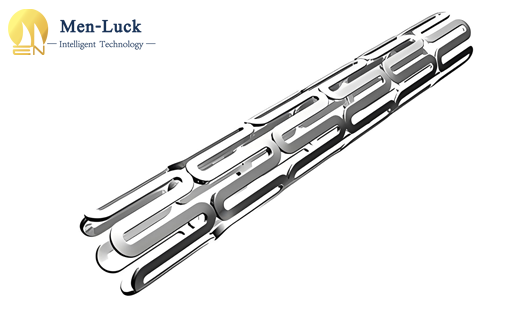
Take, for example, a self-expanding nickel-titanium stent manufactured by a leading international medical device company. Its design specifications are as follows: an outer diameter of 1.8 mm and a wall thickness of 0.12 mm. Following laser cutting, the stent must exhibit a continuous, symmetrical mesh pattern of diamond-shaped openings, each measuring a mere 0.08 mm in width. Furthermore, all cut edges must be smooth and free of burrs, and the heat-affected zone (HAZ) must not exceed 5 microns—for even the slightest trace of molten slag or thermal micro-cracks could lead to stent fatigue fracture post-implantation, thereby endangering the patient’s life.
Traditional fiber lasers, due to their relatively long pulse durations, typically generate a heat-affected zone exceeding 20 microns when cutting nickel-titanium alloys, resulting in severe oxidation along the edges. The company ultimately adopted a femtosecond laser cutting machine; with a pulse duration of less than 300 femtoseconds, it achieves true “cold processing,” wherein the material instantly vaporizes with virtually no heat accumulation in the surrounding area. Upon inspection under a 20x microscope, the cut edges of the finished stent exhibit a silvery-white metallic luster, devoid of any molten slag or micro-cracks, while its radial support force and flexibility fully meet the stringent design standards.
Efficiency and consistency are equally critical factors. A single femtosecond laser cutting machine can complete the entire mesh cutting process for an 18 mm-long stent in just 8 minutes. Moreover, when paired with a high-precision rotary axis, the system ensures that the dimensional deviation of the mesh openings along the stent’s circumference remains within a tolerance of ±2 microns. Compared to traditional electrical discharge machining (EDM) wire cutting, femtosecond laser cutting requires neither electrodes nor post-processing treatments, thereby boosting the product yield rate from 85% to over 98%. Furthermore, as stent designs evolve from initial diamond-grid patterns into more complex sinusoidal waveforms or helical structures, manufacturers need only modify their cutting programs; the entire process transition can be completed within a matter of hours, thereby significantly accelerating the R&D iteration cycle for new products.
Ranging from nickel-titanium alloy vascular stents to biodegradable polymer stents, laser cutting technology—distinguished by its unique advantages of micron-level precision, zero mechanical stress, and zero mold wear—has emerged as the “core process” in the manufacturing of interventional medical devices. It transforms complex mesh structures—which previously existed solely on design blueprints—into tangible realities, offering the hope of safer and more effective treatment to countless patients suffering from coronary heart disease.
 WhatsApp:
 Wechat
Laser precision cutting machine: the core equipment for semiconductor and communication device manufacturing 2026-08-17
In the field of semiconductor and communication device manufacturing, the limits of accuracy are constantly being rewritten - chip processes are approaching physical limits, 5G base station filter apertures continue to shrink, and tolerances for some key features have entered t…
Metal Laser Cutting Machines for Precision Airbag Generator Components 2026-07-17
In automotive passive safety systems, the airbag generator is a propellant-driven precision device. It contains multiple thin-walled metal components, such as the igniter housing, filter support, and gas diffuser. These components need to withstand extremely high temperatures a…
Laser Cutting Machines: An Efficiency Revolution for Construction Sites and Factory Maintenance 2026-06-26
In construction installation, equipment rental, and factory maintenance, do you often encounter this dilemma: urgently needing a steel beam of a specific size, an irregularly shaped reinforcing plate, or a non-standard flange gasket? Outsourcing processing has long cycles, and …
Applications of Laser Cutting Machines in Electronic Components: Precision Processing of Mobile Phone Vibrator Plates 2026-04-14
Within a smartphone lies a tiny yet critical component: the vibrator plate (or linear motor rotor). Responsible for generating subtle haptic feedback, its machining precision directly determines the comfort level of the user experience. When processing vibrator plates made of b…