2026-04-14
Applications of Laser Cutting Machines in Electronic Components: Precision Processing of Mobile Phone Vibrator Plates
(Click 392 )Within a smartphone lies a tiny yet critical component: the vibrator plate (or linear motor rotor). Responsible for generating subtle haptic feedback, its machining precision directly determines the comfort level of the user experience. When processing vibrator plates made of beryllium copper or stainless steel—materials often merely 0.1 mm thick—traditional stamping processes are highly prone to defects such as burrs, edge curling, and even micro-cracks, severely compromising the yield rate. The introduction of laser cutting machines has completely revolutionized this situation.
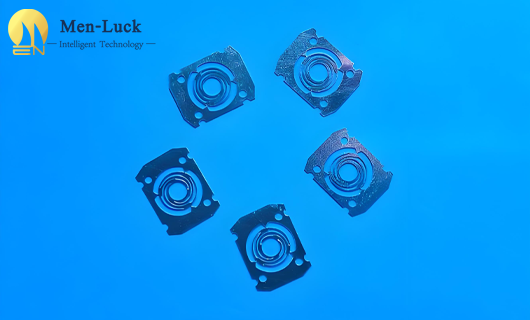
Consider, for instance, a precision electronics manufacturer that has long supplied linear motor vibrator plates to top-tier mobile phone brands. Given the complex geometry of these plates—which feature multiple flexible arms and positioning holes—traditional mold-based stamping proved not only costly but also resulted in a burr rate as high as 5% per batch, necessitating manual secondary polishing. After installing a 300W precision fiber laser cutting machine, the company began directly importing CAD drawings into the software; the laser beam now cuts along the contours to form the part in a single pass, eliminating the need for any physical molds. The cut edges are smooth and burr-free, the heat-affected zone is confined to within 0.02 mm, and the flatness of the vibrator plates exceeds 0.01 mm—ensuring that the mechanical properties of the flexible arms remain entirely unaffected.
The boost in efficiency has been equally remarkable. Capable of continuous 24-hour operation, a single laser cutting machine can process over 20,000 vibrator plates per day—a production capacity equivalent to that of three traditional stamping presses combined. More importantly, whenever new mobile phone models are released or vibrator plate designs change, the company simply updates the cutting program; a complete production switchover can be accomplished in just ten minutes, thereby eliminating the lengthy lead times and high costs historically associated with mold manufacturing. According to the factory’s production manager, the adoption of laser cutting has reduced overall production costs by approximately 35% and boosted the yield rate from 95% to 99.6%.
From miniature vibrator plates to precision connector springs, laser cutting machines are rapidly becoming the core equipment for flexible manufacturing in the electronic components sector. Leveraging their inherent advantages—mold-free operation, high precision, and minimal thermal impact—these machines not only resolve the precision bottlenecks inherent in traditional stamping processes but also, through their exceptional flexibility, empower electronics manufacturers to respond swiftly to market shifts and gain a competitive edge in a fiercely contested landscape.
 WhatsApp:
 Wechat
Selecting Laser Cutting Machine Configurations Based on Application 2026-11-12
Different processing applications impose distinct requirements on fiber laser cutting machines. A reliable approach to equipment selection is to first analyze the workpieces, then evaluate the technical specifications. For thin-sheet batch components—such as enclosures o…
Key points for selecting fiber laser cutting machine for cutting thick carbon steel plates 2026-10-21
The cutting of thick carbon steel plates is a key concern for many equipment supervisors in metal processing plants. Traditional plasma cutting has a rough cross-section and requires a large amount of subsequent processing; The performance of fiber laser cutting machines in the…
Fiber Laser Cutting Machine: Addressing Stainless Steel Slag Adhesion 2026-09-29
In stainless steel cutting, slag hanging and burrs are common issues in sheet metal workshops, which not only increase grinding time but also affect workpiece accuracy and delivery efficiency. As a laser cutting machine manufacturer, we share several practical suggestions from …
Laser precision cutting machine: the core equipment for semiconductor and communication device manufacturing 2026-08-17
In the field of semiconductor and communication device manufacturing, the limits of accuracy are constantly being rewritten - chip processes are approaching physical limits, 5G base station filter apertures continue to shrink, and tolerances for some key features have entered t…