2025-04-22
Application of laser cutting machine in vascular clamp processing
(Click 255 )As an indispensable instrument in minimally invasive surgery, the manufacturing accuracy and surface quality of vascular clamps are directly related to the success of the operation. In recent years, laser cutting technology has been widely used in the manufacture of vascular clamps due to its high precision, high efficiency and contactless processing.
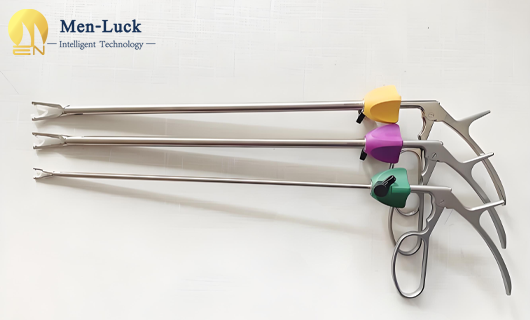
Vascular clamps are mainly used to temporarily block blood flow during surgery to prevent bleeding or control the direction of blood flow. Therefore, its manufacturing needs to meet the following requirements:
High precision: The size and shape of the vascular clamp must be precise to ensure that the blood vessel can be clamped accurately and stably during surgery.
Smooth surface: The surface of the vascular clamp should be as smooth as possible to reduce damage to the blood vessel wall and avoid thrombosis.
Material compatibility: Vascular clamps are usually made of biocompatible materials such as stainless steel and titanium alloy, and the manufacturing process needs to match these material properties.
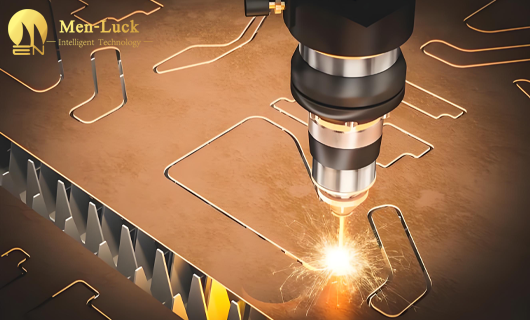
The laser cutting machine irradiates the surface of the material with a high-energy-density laser beam, causing the material to melt or vaporize rapidly, thereby achieving cutting. Its application in the processing of vascular clamps is mainly reflected in the following aspects:
High-precision cutting: The laser cutting machine can achieve micron-level cutting accuracy, which fully meets the high-precision requirements of vascular clamps. By precisely controlling the energy and movement trajectory of the laser beam, vascular clamps of complex shapes can be cut with neat edges and no burrs.
Non-contact processing: Laser cutting is a non-contact processing method that does not cause mechanical stress or damage to the vascular clamp material. This is especially important for the processing of some brittle materials or thin-walled materials, which can effectively avoid material deformation or rupture.
Wide material adaptability: The laser cutting machine can cut a variety of materials, including stainless steel, titanium alloy, nickel-titanium alloy and other common materials for vascular clamps. This makes laser cutting technology widely applicable in the manufacture of vascular clamps.
Efficient mass production: The laser cutting machine has the characteristics of high speed and high efficiency, and can realize automated mass production. By programming and controlling the laser cutting machine, a large number of vascular clamps can be cut quickly and accurately, improving production efficiency and reducing production costs.
 WhatsApp:
 Wechat
Laser precision cutting machine: the core equipment for semiconductor and communication device manufacturing 2026-08-17
In the field of semiconductor and communication device manufacturing, the limits of accuracy are constantly being rewritten - chip processes are approaching physical limits, 5G base station filter apertures continue to shrink, and tolerances for some key features have entered t…
Metal Laser Cutting Machines for Precision Airbag Generator Components 2026-07-17
In automotive passive safety systems, the airbag generator is a propellant-driven precision device. It contains multiple thin-walled metal components, such as the igniter housing, filter support, and gas diffuser. These components need to withstand extremely high temperatures a…
Laser Cutting Machines: An Efficiency Revolution for Construction Sites and Factory Maintenance 2026-06-26
In construction installation, equipment rental, and factory maintenance, do you often encounter this dilemma: urgently needing a steel beam of a specific size, an irregularly shaped reinforcing plate, or a non-standard flange gasket? Outsourcing processing has long cycles, and …
Femtosecond Laser Precision Cutting: Overcoming the Challenges of Processing Nickel-Titanium Heart Stents 2026-05-19
In the field of interventional cardiology, heart stents are hailed as the "guardians of life's pathways." A nickel-titanium alloy tube—measuring a mere 1.5 millimeters in diameter with a wall thickness of approximately 100 microns—must be processed into a mesh-like structure fe…