2025-04-22
Application of laser cutting machine in valve stent processing
(Click 338 )With the continuous advancement of medical technology, the manufacturing process of valve stents is also changing with each passing day. As an advanced processing method, laser cutting technology plays an increasingly important role in the manufacture of valve stents.

The material selection of valve stents is crucial. Commonly used materials include metals (such as stainless steel, nickel-titanium alloy) and polymer materials (such as polyethylene terephthalate, polyetheretherketone). These materials not only need to have good biocompatibility, but also meet the requirements of mechanical strength, fatigue resistance and corrosion resistance. Laser cutting machines can optimize processing for different materials to ensure cutting quality and efficiency.
Laser cutting machines can achieve micron-level cutting accuracy to ensure that the size and shape of valve stents precisely meet the design requirements, which is especially important for valve stents that require precise control of hemodynamics. The non-contact processing method avoids material damage caused by tool wear or contact force in traditional mechanical processing, and improves product quality and reliability.
Since the heat-affected zone of laser cutting is small, the thermal damage to the material during processing is minimized, thereby maintaining the original performance of the material, which is particularly important for the processing of biomaterials. In addition, the laser cutting machine can realize the cutting of complex graphics through programming, adapt to the processing needs of valve stents of different structures and sizes, and greatly improve production flexibility.
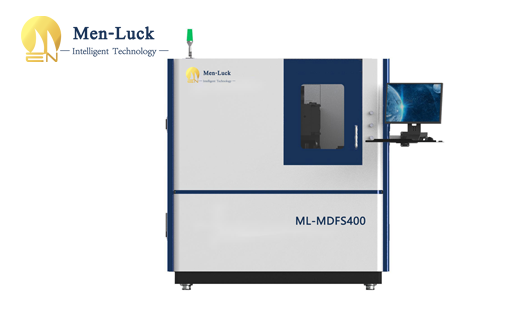
With the continuous advancement of laser technology, the application of laser cutting machines in valve stent processing will be more extensive. In the future, laser cutting technology will develop in the direction of higher precision, higher efficiency and lower cost. At the same time, combined with additive manufacturing technology, laser cutting machines will play a greater role in the personalized customization and complex structure manufacturing of valve stents.
 WhatsApp:
 Wechat
Selecting Laser Cutting Machine Configurations Based on Application 2026-11-12
Different processing applications impose distinct requirements on fiber laser cutting machines. A reliable approach to equipment selection is to first analyze the workpieces, then evaluate the technical specifications. For thin-sheet batch components—such as enclosures o…
Key points for selecting fiber laser cutting machine for cutting thick carbon steel plates 2026-10-21
The cutting of thick carbon steel plates is a key concern for many equipment supervisors in metal processing plants. Traditional plasma cutting has a rough cross-section and requires a large amount of subsequent processing; The performance of fiber laser cutting machines in the…
Fiber Laser Cutting Machine: Addressing Stainless Steel Slag Adhesion 2026-09-29
In stainless steel cutting, slag hanging and burrs are common issues in sheet metal workshops, which not only increase grinding time but also affect workpiece accuracy and delivery efficiency. As a laser cutting machine manufacturer, we share several practical suggestions from …
Laser precision cutting machine: the core equipment for semiconductor and communication device manufacturing 2026-08-17
In the field of semiconductor and communication device manufacturing, the limits of accuracy are constantly being rewritten - chip processes are approaching physical limits, 5G base station filter apertures continue to shrink, and tolerances for some key features have entered t…